

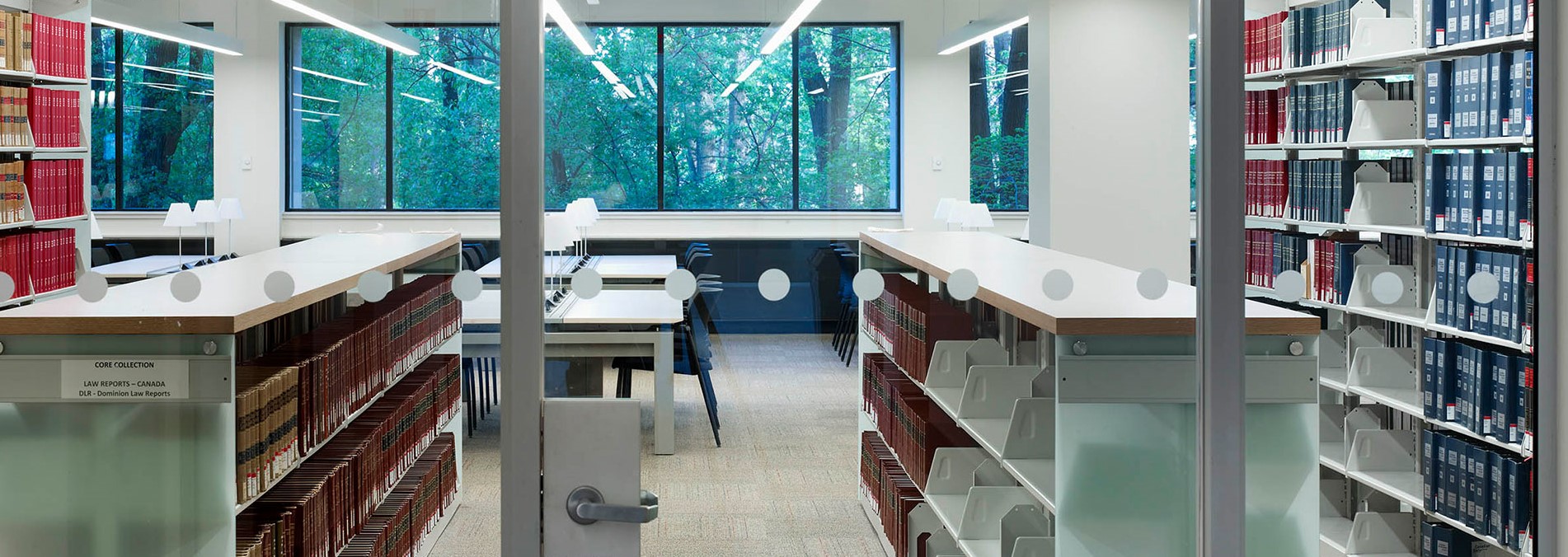
Will the Public Lose Access to Essential Legal Documents?

“When people say everything’s online,” says Jerry Dupont of the Law Library Microform Consortium [LLMC], “they’re woefully uninformed.”

Yes, it might seem like we have access to all the legal information we might ever need but Jerry Dupont’s observation still rings true.  And while ongoing digitization efforts of law and other libraries continue to benefit the legal research community, the progress of these initiatives has been hampered by the current economic climate.

“Across the country, law libraries are trying to adapt to the digital revolution and preserve historic and precedential documents.  But budget cuts have hit hard at academic law libraries, which historically have hosted some of the most robust legal collections.  And the pressures are creating concerns that the public will lose access to essential legal documents.”

In a recent article published by the American Bar Association, Hollee Schwartz Temple, director of the legal research and writing program at West Virginia University College of Law,  asks:  “Are digitization and budget cuts compromising history?”  This article provides a nice overview of some the issues and potential threats that affect long-term access and preservation to our digital legal resources.

As Schwartz Temple reports evidence of this slow down was found in a recent American Association of Law Libraries (AALL) survey.  The survey found that “nearly 60 percent of … respondents have been making do with less for the past several years.”

“Even the venerable Law Library of Congress, home to the world’s largest legal collection, has felt the impact.  According to Law Librarian of Congress David Mao, budget woes have affected the library’s ability to acquire materials, preserve them and make them readily available.”

The ABA’s Standing Committee on the Law Library of Congress contributed to the development of the Uniform Electronic Legal Material Act (ULEMA) U.S. legislation that aims to “harmonize standards for acceptance of electronic materials across jurisdictional boundaries, and to help lawyers feel confident that the digital material they rely upon is current.”

The chair of this Standing Committee, Liz Medaglia, asks:  “With the increasing number of materials that are born digital and never get into hard copy, how do you make sure that what you have is accurate, current and preserved?”  It’s hoped that legislation like ULEMA will help foster long-term preservation and provide ways to ensure available information is authoritative.

Regardless of the stability of law library budgets issues surrounding access and preservation of digital legal materials continues to gain importance.  The LLMC has made great contributions in this area but they are just one piece in the larger and increasingly complex legal resource puzzle and, as Dupont says, they are not “equipped to digitize the entirety of primary American legal authority immediately.”

While LLMC (who have also included some Canadian legal resources) and other organizations like them should be loudly applauded a national strategy on digital preservation is needed to deal with these issues here in Canada.  Louis Mirando, Chief Law Librarian at the Osgoode Hall Law School Library, introduced a proposal for a special interest group on digital preservation and access at the recent annual meeting of the Canadian Association of Law Libraries. This may be a valuable first step toward coordinating efforts in this country.

Morris L. Cohen Student Essay Competition

Recently posted to the American Association of Law Libraries (AALL) Member’s Forum.  Canadian students are eligible and encouraged to participate:

The Legal History and Rare Books Section (LH&RB) of the American Association of Law Libraries, in cooperation with Cengage Learning, announces the fourth annual Morris L. Cohen Student Essay Competition (http://www.aallnet.org/sis/lhrb/cohen.html).

The competition is named in honor of Morris L. Cohen, late Professor Emeritus of Law at Yale Law School. Professor Cohen was a leading scholar in the fields of legal research, rare books, and historical bibliography.

The purpose of the competition is to encourage scholarship in the areas of legal history, rare law books, and legal archives, and to acquaint students with the American Association of Law Libraries (AALL) and law librarianship.

Eligibility
Students currently enrolled in accredited graduate programs in library science, law, history, or related fields are eligible to enter the competition. Both full- and part-time students are eligible. Membership in AALL is not required.

Requirements
Essays may be on any topic related to legal history, rare law books, or legal archives. The entry form and instructions are available at the LH&RB website.
Entries must be submitted by 11:59 p.m., April 15, 2011.

Awards
The winner will receive a $500.00 prize from Cengage Learning and up to $1,000 for expenses associated with attendance at the AALL Annual Meeting.

The runner-up will have the opportunity to publish the second-place essay in LH&RB’s online scholarly journal Unbound: An Annual Review of Legal History and Rare Books.

Please direct questions to Robert Mead at libram@nmcourts.gov.

Selected Titles from the International Encyclopedia of Laws Now Available Online

We have recently acquired the online versions of the following selected titles that are part of Wolters Kluwer’s International Encyclopedia of Laws:

IEL Constitutional Law, edited by Prof. Dr. André Alen
Presents a country-by-country survey of constitutional law throughout the world and aims to publish all of the constitutions of the world in English translations. More information available.

IEL Criminal Law, edited by Prof. Dr. Frank verbruggen
Provides general information on criminal law and procedure in different countries and introduces background knowledge necessary for understanding the principles of criminal justice. Provides detailed examination of substantive criminal law (general principles, the principles of criminal responsibility or liability, and the grounds for the justification of criminal offences). Covers criminal procedure for each country, including the general characteristics of the procedure, the organization of investigation, pre-trial proceedings, trial stage and appeals and also covers the execution and extinction of sanctions. More information available.

IEL Intellectual Property Law, edited by Prof. Dr. Hendrik Vanhees
Provides an overview of all the pertinent information on intellectual property needed to gain a clear comprehension of the legislation and policy on the subject in different countries. Analyzes and describes theory and practice in a large number of countries providing information on all major and important international conventions and on international bodies like the EU and WIPO/OMPI. More information available.

IEL Labour Law and Industrial Relations, edited by Prof. R. Blanpain
Includes English translations of the important labour and industrial relations laws of over 20 nations. Covers individual as well as collective labour relations, developing trends in the relationship between management and labour, and covers major international bodies such as the ILO, NAFTA, OECD and the EU. More information available.

IEL Private International Law, edited by Prof. Bea Verschraegen
Provides comprehensive coverage of national laws on conflict of laws, now more commonly referred to as private international law. Presents country-by-country national monographs dealing with the statutes, regulations and case law each country. More information available.

New HeinOnline Collections Acquired

The following additions to our HeinOnline collections have been recently purchased by the law library:

American Law Institute Library
Features all superseded restatements, codifications, proceedings, reports and other special publications published by the American Law Institute.

History of Bankruptcy, Taxation and Economic Reform in America, Part III
Includes legislative histories, treatises, documents and more related to bankruptcy law in America. It also includes classic books dating back to the late 1800s and links to scholarly articles that are related to the study of bankruptcy in America.

Intellectual Property Law Collection
Includes legislative histories, treatises, documents, classics, and more relating to copyrights, patents, and trademarks. Allows searching across all intellectual property law materials in one database. Notable titles include: Legislative History of the 1909 Copyright Act (1976), Kamenstein Legislative History Project: A Compendium and Analytical Index of Materials Leading to the Copyright Act of 1976, and William Robinson’s Law of Patents for Useful Inventions.

Israel Law Reports
Includes the complete run of the Israel Law Reports which provides access to more than 220 cases in an online digital format.

Taxation & Economic Reform in America: A Historical Archive, 1781-2010
This historical archive contains more than 2,300 volumes and one million pages of legislative history materials and other documents. It includes the complete Carlton Fox Collection which contains nearly 42 years of historical legislation related to the internal revenue laws from 1909-1950. It includes more than 100 other legislative histories related to taxation, economic reform, and stimulus plans.

U.S. Federal Agency Documents, Decisions, and Appeals
This library is a complete collection of the official case law of some of the United States most important U.S. Federal Agencies such as: The Federal Communications Commission (FCC), the National Labor Relations Board (NLRB), and the Securities and Exchange Commission (SEC).

Please visit our HeinOnline subscription page for a complete list of available collections.

Intellectual Property and Open Access, Monday May 2nd

As part of the Scholarly Communication Series there will be a presentation for faculty and graduate students on Intellectual Property and Open Access. This is a co-presentation of the York University Libraries, the Faculty of Graduate Studies, and the Faculty of Liberal Arts and Professional Studies.

Featured speakers include:

  • Breanne Whitwell, Research Officer in the Faculty of Graduate Studies
  • Louis Mirando, Chief Law Librarian in the Osgoode Hall Law School Library
  • Sarah Howe, Associate Director of Intellectual Property & Research Agreements in the Office of Research Services
  • Andrea Kosavic, Associate Librarian of Digital Initiatives in the Scott Library

This event takes place on Monday, May 2nd from 2:00-4:00pm in the Senate Chamber (9th floor Ross (North)).

Open Access This Afternoon at Senate Committee Meeting

Following the Senate Committee meeting this afternoon there will be a discussion of Open Access facilitated by Professor and Associate Dean of Research Lisa Philips of the Osgoode Hall Law School. This is part of the Report to Senate by the Executive Committee:

Senate Executive has extended an invitation to Professor Lisa Philipps of Osgoode [and to University Librarian Cynthia Archer] to brief Senate on Open Access. The presentation will cover principles and practicalities, and will provide ample time for discussion. A number of Senators have a special interest and expertise in Open Access, and will contribute to the discussion. This session will follow the completion of regular items of business in committee reports.

Our colleague Andrea Kosavic, Digital Initiatives Librarian and Chair of the York University Libraries Scholarly Communication Committee, will also be delivering a presentation on Open Access Initiatives at York. Further information about open access is also available on the Scholarly Communication website.

Video: Legal Research Essentials: Finding Cases on Point

There’s a great series of short videos on ‘Finding Cases on Point’ available through the British Columbia Courthouse libraries. The course content was created by Alex McNeur of Courthouse Libraries BC in consultation with Mark Hicken, Kristina Oldenburg, and Mandy Ostick and “demonstrate[s] how you can conduct case law research more effectively … [and] … how to use popular legal research tools that are free (CanLII) or that you can use for free at BC courthouse libraries (CED, CLE Online, LawSource).

The course will teach you:

  • How to identify strong keywords for efficient research
  • How to use the keywords to find relevant cases
  • How to find related cases by noting up your case
  • How to check if the cases you’ve found are still good law

A quick and useful overview of how to find case law.